Orthographic Mapping

The Authoritative Foundation for Digital Twins and Site Intelligence

An orthophoto is more than just an aerial photograph — it is a geodetically corrected, engineering-grade foundational layer of reality capture. While standard aerial imagery contains perspective distortion and varying scales, our orthorectification process removes these inconsistencies.

By correcting for topographic relief, lens distortion, and camera tilt, we create a single, seamless, and uniform-scale view of your entire project. The result is a map where every pixel holds geographic truth, allowing for direct measurements of distance, area, and volume with engineering-grade reliability.

Why Precision Photogrammetry Matters

In the world of AEC, "close enough" isn't enough. Our process ensures that your digital site data aligns perfectly with real-world coordinates and CAD environments.

  • Eliminate Perspective Bias: Standard photos "lean" away from the center. Our orthomosaics ensure a perfectly top-down view across the entire dataset.

  • Engineering-Grade Accuracy: By integrating Ground Control Points (GCPs) and multi-band GNSS receiver workflows, we deliver spatial data that integrates seamlessly into your existing CAD, GIS and BIM workflows.

  • Time-Series Analysis: Create an indisputable visual record of site progress. Compare "As-Built" conditions against "As-Designed" plans to identify deviations before they become costly change orders.

  • Actionable Analytics: Beyond the visual, our photogrammetry data generates high-density point clouds and Digital Surface Models (DSMs) for hydrological analysis and volumetric calculations.

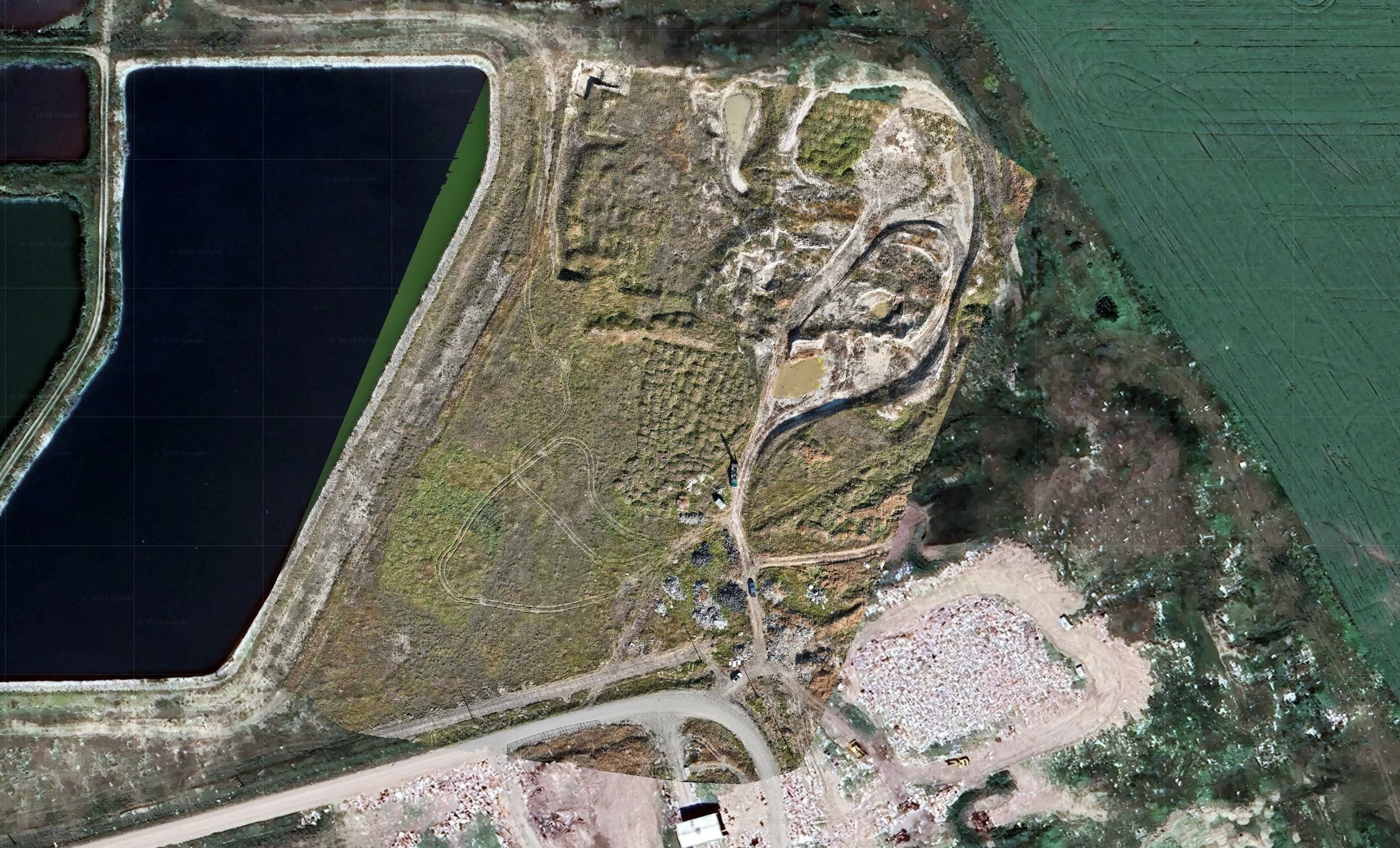
High-resolution aerial orthomosaic map of a future borrow pit site showing centimeter-level detail for project planning.
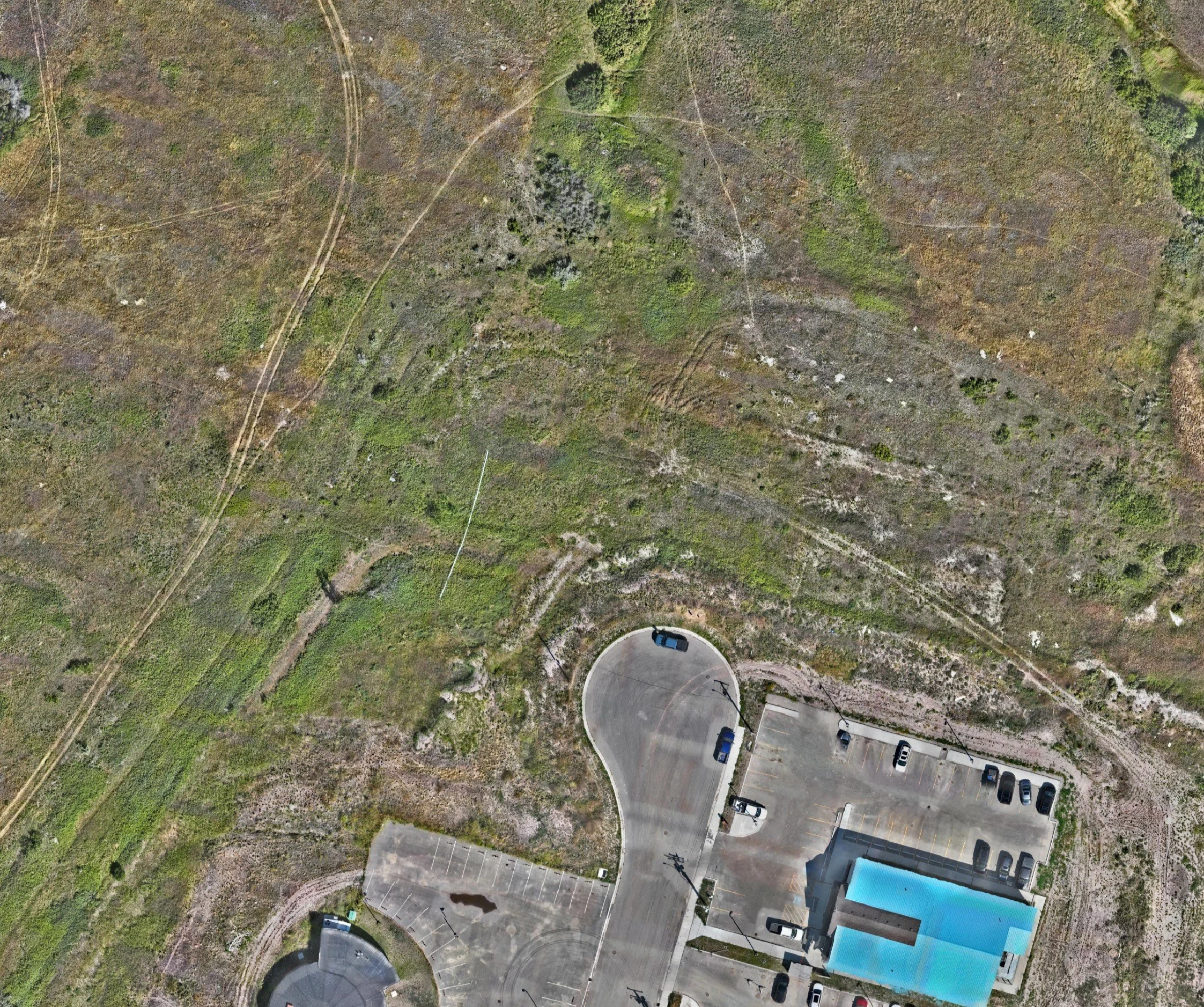
High-resolution aerial orthomosaic map of a future project site showing centimeter-level detail for project planning.

Applications Across the Project Lifecycle

1. Pre-Construction & Design: The "Single Source of Truth"

  • Topographic Baseline: Create high-resolution contour maps and Digital Terrain Models (DTMs) to understand site drainage and slope stability before mobilization.

  • Existing Conditions Documentation: Capture an indisputable visual record of the site, including neighboring structures, vegetation, and existing infrastructure, to mitigate future liability claims.

  • Feasibility & Planning: Use uniform-scale imagery to conduct precise site-walks virtually, identifying constraints like utility easements or environmental buffers without leaving the office.

2. Active Construction: The "Digital Pulse" of the Jobsite

  • Weekly Progress Monitoring: Generate time-stamped, georeferenced maps to track schedule vs. reality. Overlay your BIM/CAD models directly onto the week’s orthomosaic to identify deviations in real-time.

  • Utility & Foundation Verification: Capture high-resolution imagery of sub-surface utilities, rebar mats, and post-tension cables after installation but before they are covered by concrete or backfill.

  • Site Logistics & Safety: Plan crane swings, material staging areas, and emergency egress routes using an up-to-date, undistorted view of the ever-changing site environment.

3. Material & Earthwork Management: Volumetric Intelligence

  • Cut-and-Fill Analysis: Compare current site elevations against the "finished grade" design to calculate exactly how much dirt needs to move.

  • Inventory Audits: Get 98%+ accurate volumetric measurements for gravel, topsoil, or mulch stockpiles for more precise billing and procurement.

  • Subcontractor Accountability: Use orthophotos to verify that grading or excavation work meets the specific quantities outlined in the contract.

4. Close-out & Handover: The Authoritative "As-Built"

  • As-Built Support: Provide the owner with a geodetically accurate record of the final site conditions, which is invaluable for future renovations or utility repairs.

  • Compliance & Permitting: Use georeferenced imagery to prove to regulators that wetland buffers, silt fences, and drainage basins were maintained according to environmental permits.

5. Operations & Maintenance: Long-Term Site Intelligence

  • Asset Management: Map and tag roof assets, HVAC units, and parking lot conditions within a GIS environment for predictive maintenance.

  • Infrastructure Health: Conduct repeatable, high-resolution inspections of pavement, bridges, or facades, using the orthomosaic as a coordinate-based index for all inspection photos.