
Digital Twins & 3D Modeling
A dimensionally accurate replica you can measure
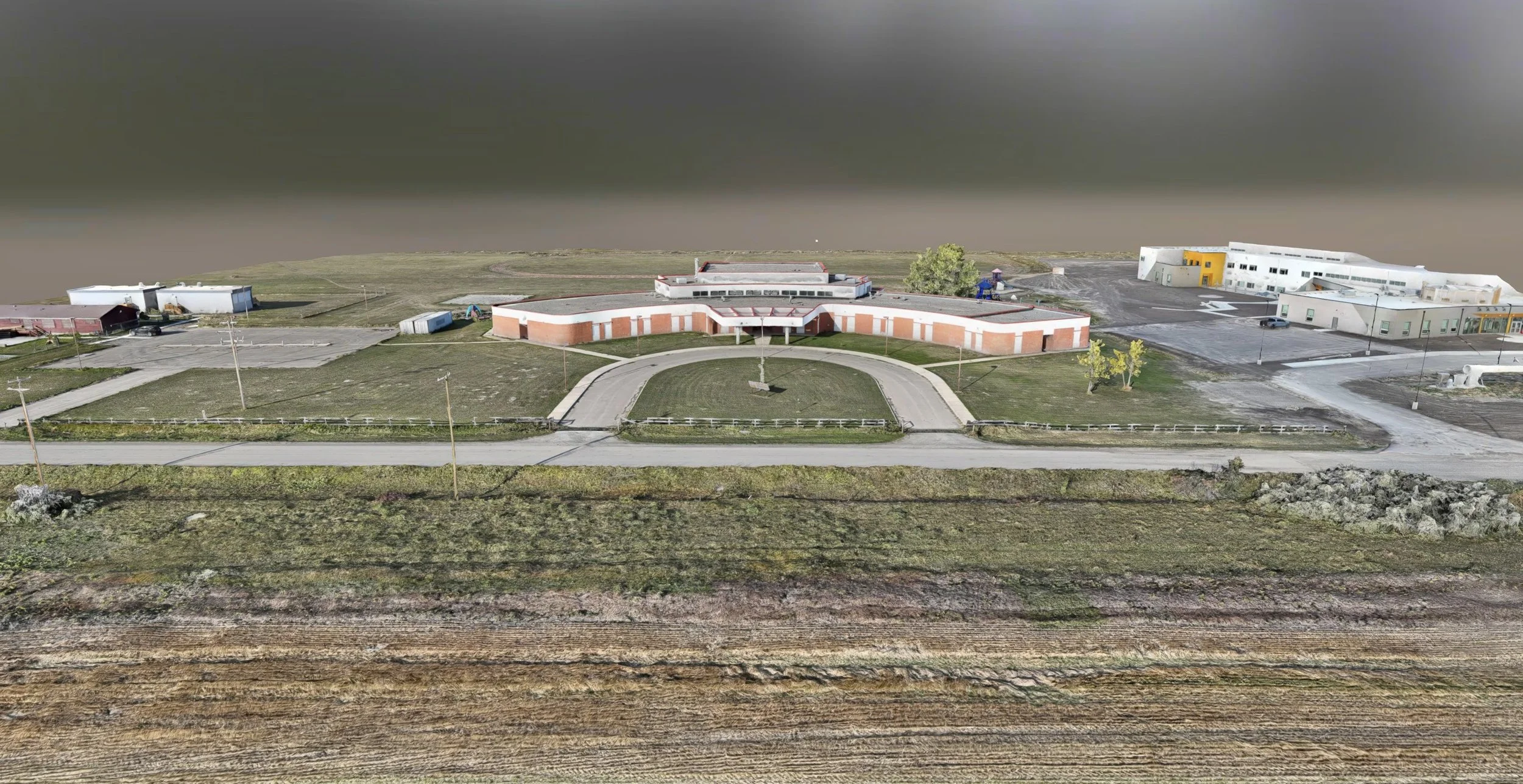
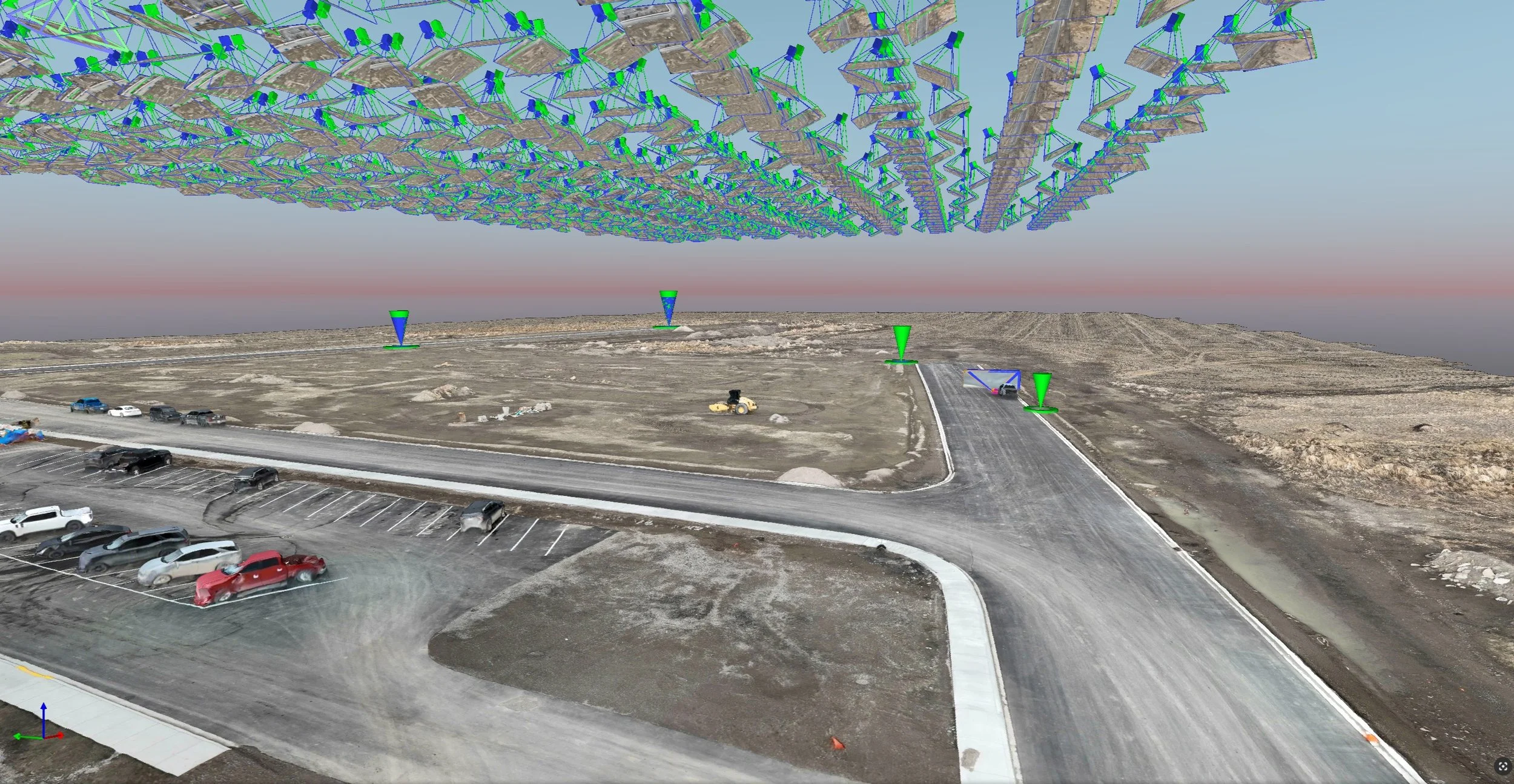
A digital twin is only worth building if you can trust its dimensions. Ours are built from controlled photogrammetry and terrestrial scanning and tied to real-world coordinates, so they’re not just photorealistic — they’re measurable. Take distances, check verticality, pull volumes, and place proposed design into the exact context of what’s already there.
That turns a site into something your team can interrogate from a desk. An engineer in one city and a contractor in another work from the same model, on the same coordinates, at the same time — without booking another site visit.
What makes it useful
• It carries real measurements. Calibrated against ground control, the model supports the kind of dimensional checks you’d otherwise drive out to take by hand.
• It speaks to your design tools. Models export into Revit, AutoCAD, Navisworks, and Civil 3D, populating your BIM environment with true site context for clash detection and feasibility work.
• It holds the as-built. Capture framing, reinforcement, and MEP before they’re closed in, and you’ve got a permanent, navigable record of what’s actually behind the wall.
• It travels. Remote reviews and virtual walkthroughs keep distributed teams aligned and cut the trips that don’t need to happen.
Where it fits
• Design & feasibility — Capture existing conditions accurately and drop proposed BIM models into the real environment to surface constraints and conflicts early.
• Construction & QC — Compare as-built against as-designed on a regular cadence, run clash detection against a dimensionally true model, and resolve issues before they reach the field.
• Handover — Deliver a final twin that records MEP locations and finished conditions for the owner.
• Operations — Give facility teams a navigable model to locate services, plan tenant work, and manage space remotely.